If you search medical aesthetics near me and open the first few results, the websites will look polished and the promises rich. That’s not enough to choose a program that can carry you into a real career. Touring schools separates the marketing from the day-to-day reality. You learn how the instructors teach, how clinics run, and what support you’ll have when the coursework gets difficult. I’ve walked through dozens of campuses, from a neighborhood beauty institute with a single treatment room to a medical aesthetics school operating in a physician’s clinic with 10 lasers humming. The strongest programs reveal themselves within an hour if you know what to look for, what to ask, and how to read the room.
What separates a medical aesthetics school from a general beauty school
A traditional beauty school or beauty college focuses on foundational skills: sanitation, skin anatomy, facials, makeup, waxing, lash enhancements, basic machines like galvanic and high frequency. These programs are valuable, especially if you plan to work in day spas or as a waxing technician. A skincare academy or aesthetics school gives more hours in skin physiology and advanced facials, sometimes with chemical peels and basic microdermabrasion. When you see spa beauty therapy courses or a waxing academy, expect a scope aimed at spa services, not medical devices.
Medical aesthetics, sometimes written as medical aesthetician training, is a different tier. A proper medical aesthetics program lives in the overlap of dermatology, cosmetic nursing, and advanced cosmetology. You work with higher-strength peels, medical-grade skincare, laser and light platforms, radiofrequency, microneedling, and potentially lymphatic or post-procedure care. In some regions, only regulated health professionals can deliver specific treatments like injectables or ablative lasers. Schools should teach to your scope and local law, not skirt the rules. If a campus promises hands-on with every laser under the sun but your license won’t permit those services, that’s a red flag.
If your market is Ontario, the phrase medical aesthetics Brampton pops up often. The Greater Toronto Area is dense with schools offering medical aesthetics courses and para-medical skin care diploma options. Some are excellent, others are rebranded beauty schools that added a laser room. Your on-site tour is where you separate one from the other.
A realistic touring plan that works
Start with three to five schools within a 60 to 90 minute drive. The best program for you might be across town, and the commute is temporary. Call ahead, schedule a proper tour, and ask to see a live class, not just empty classrooms. If they can’t accommodate that within a week or two, consider why. Strong programs rarely hide their sessions.
Begin with the lobby, then the treatment rooms, then the classrooms. Watch the flow between didactic and hands-on. Talk to students in the hallway, not just the admissions counselor. Ask how many devices are available per class and how they rotate models. If the school has a clinic open to the public, sit in the waiting area for two minutes. You’ll learn as much from the clipboard process and post-treatment instructions as you will from the brochure.
The clinic tells the truth
What’s on the clinic floor reveals the school’s priorities. A medical aesthetics school should have a variety of devices, a mix of older workhorse platforms and newer systems. Diversity matters more than shiny novelty. A single-adaptor device that claims to do laser hair removal, IPL, and fractional resurfacing equally well usually does nothing particularly well. Ask to see device names and manufacturer labels. You are not shopping for brands, but major platforms typically come from established manufacturers with service support. If anything looks unbranded or cobbled together, ask for the device’s Health Canada, FDA, or equivalent clearance, depending on your region.
Room layout matters. You want treatment rooms with adequate ventilation, sharps disposal containers if injectables are taught by credentialed staff, eye protection hung near laser stations, and clear signage about contraindications. I look for practical touches like a scale and blood pressure cuff if the curriculum includes comprehensive intake. A cluttered backroom filled with broken wands and tangled cords usually means poor maintenance and limited hands-on time.
Most revealing is the model pipeline. Good schools maintain a steady stream of real clients who book treatments at reduced rates. Ask, on a typical day, how many clients rotate through a laser class. If the instructor says two or three per eight students, clinical time may be stretched thin. When a class has 12 learners and only one working device, someone is mostly watching. Watching is not training.
The instructor bench and why it matters
Curriculum is only as good as the people teaching it. You want an instructor bench with depth. In an advanced aesthetics college or medical aesthetics program, the faculty should include at least one of the following: a nurse with aesthetic practice experience, a physician who oversees medical protocols, or a senior medical aesthetician with five or more years on devices in live clinics. Mix matters. A great nurse injector may not be the best laser instructor, while a seasoned laser specialist may not write the strongest treatment plans for complex melasma. On your tour, ask who teaches which modules and how long they have worked clinically, not just in classrooms.
Watch how they teach during a live session. Strong instructors coach in real time with precise language: adjust your fluence two joules, overlap by 10 to 15 percent, avoid passes over tattoos, maintain perpendicular contact, wipe carbon residue before the next pass. Vague encouragement without correction is not enough. In advanced classes, you should hear risk language woven into technique: how to avoid post-inflammatory hyperpigmentation for Fitzpatrick IV to VI, when to patch test, and how to handle blistering within the first hour.
Syllabi that build real competence
A typical medical aesthetics program ranges from 300 to 900 hours depending on region and whether it layers onto a base esthetics license. Time alone is not the metric. I look for curricula that build from skin science to modality strategy to outcomes tracking. You should see modules for:
- Skin anatomy and wound healing phases tied to device effects, not just PowerPoint diagrams. Laser physics in everyday language, including wavelength, chromophores, pulse duration, fluence, and spot size with case examples. Chemical peel laddering: how to step clients from superficial to mid-depth safely, and when to pause. Pigment and acne management that treats routine cases while flagging medical referrals. Microneedling protocols separated for scars versus rejuvenation, with needle depth rationales. Pre- and post-care aligned with evidence and common-sense product chemistry, not just brand handouts.
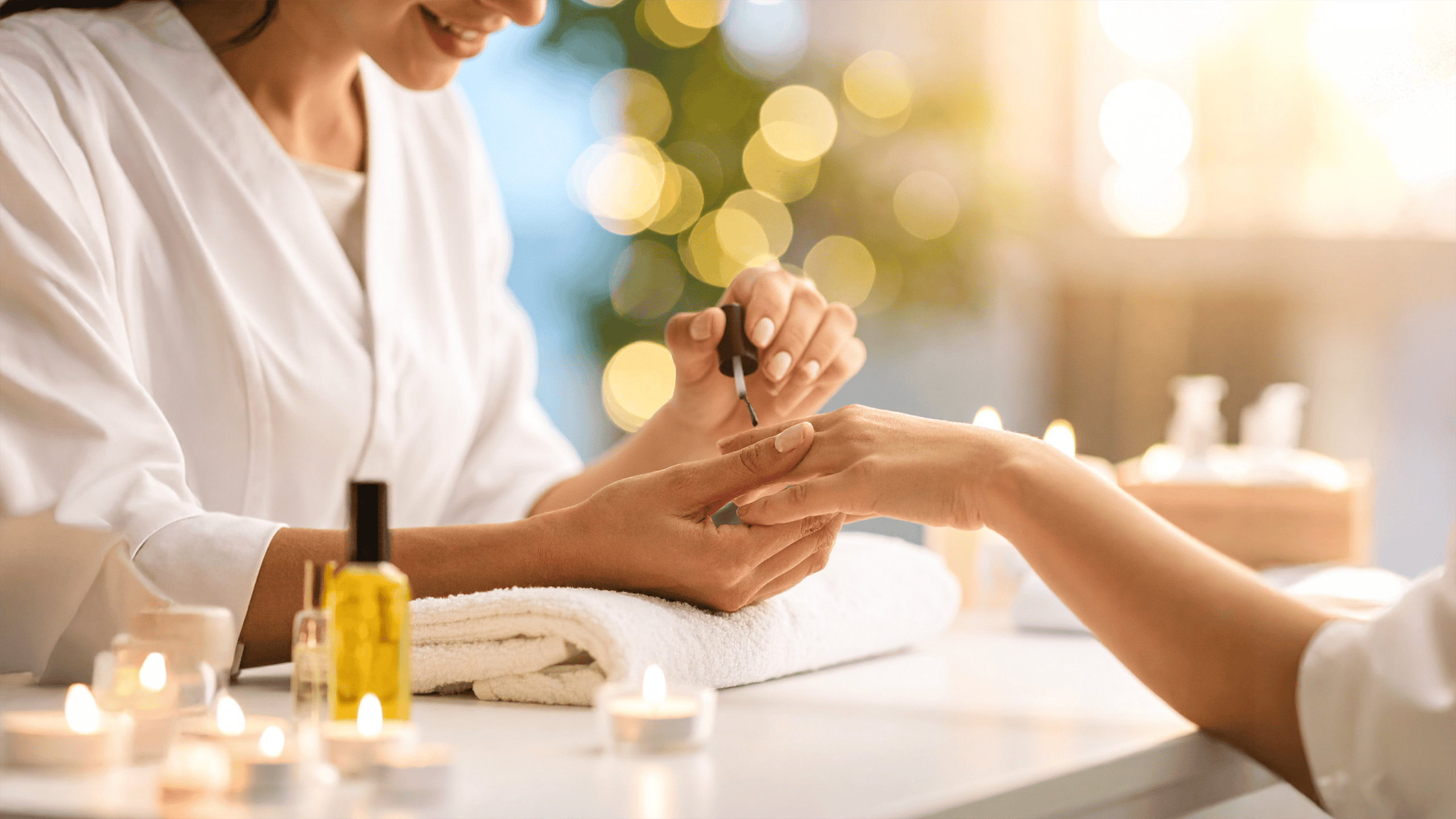
If they offer a para-medical skin care diploma, look for additional training in working alongside physicians, charting standards, privacy compliance, and post-surgical support. If they offer a nail technician program or waxing classes as separate streams, that’s fine. Just make sure those do not cannibalize clinic time for the medical aesthetics track. A shared calendar is telling. If wax days push lasers off the floor, your training will lag.
Shadowing, not just demo days
Some schools schedule orchestrated demo days when a manufacturer brings a rep to show a platform. Demos have value, but your competence comes from repetition. Ask how many full treatments you will complete as the primary operator for each device category. Numbers vary, but you want more than two or three exposures before assessment. If a campus claims unlimited hands-on, pin it down. Unlimited often means as many as you can schedule if you bring your own models. That can work if you have family and friends willing to book weekday appointments, but most students need the school to source models consistently.
Ask whether you can shadow graduates at partner clinics. A half-day of observation with a busy team will add live context you cannot simulate. You learn how providers adjust when a client arrives on doxycycline or when a same-day retinoid application requires rescheduling.
Regulatory reality and scope
Medical aesthetics touches regulated acts differently across jurisdictions. In many places, laser and light-based treatments require specific certifications or medical oversight. Injectables generally demand a licensed prescriber. A solid school will turn this into a clear pathway: what you can do as a graduate, what additional licenses or partnerships you need, and how they help you meet those requirements legally. If a program winks at scope or promises workarounds, walk away. Clients trust that you know your lane, your complications, and your plan if something goes wrong.
For those searching skincare academy near me or beauty institute options with an eye toward medical, confirm whether the program culminates in a recognized credential. Some regions accept private certificates, others require provincial or state exams. If the school can’t explain your path to licensure in two sentences, the back-end paperwork may be weak.
Equipment access after graduation
The day after graduation is where many careers stall. Devices are expensive, financing can be tricky, and employers want ready operators. Ask how the school bridges that gap. Schools with strong industry ties often arrange device rentals, group discounts, or hosted training rooms where alumni can book time. I have seen successful graduates lease a fractional hour block weekly for the first three months while they build clientele. Programs that convene device vendor nights and introduce you to reps provide practical benefits beyond the classroom.
It’s also fair to ask how often the school updates platforms. Laser hair removal tech from a decade ago still works, but if all your training is on legacy systems, you’ll be slow in interviews. Conversely, a lab of brand-new machines with no service contracts can be a red flag if they go down and the class has no backups.
How to read placement numbers and salary claims
A brochure that guarantees six-figure income after a short course is selling fantasy. Real numbers depend on your market, your sales comfort, your speed, and whether you join a clinic or start solo. In urban centers, new medical aestheticians might start around a base of 18 to 28 dollars per hour plus commission, or straight commission ranging from 20 to 35 percent depending on who provides product and room. Busy laser hair removal operators often build faster because the service is repeatable and easy to sell. Complex pigmentation or scar work pays more per session but books fewer clients per day.
When a school quotes placement rates, ask for denominators and time frames. Placed within 90 days means something different than placed within one year. Clarify whether self-employment counts as placement. It should, but you want transparency. Ask for examples of employers who regularly hire their grads, and then call one or two. Most clinic managers will give you a quick read on prep quality.
Evaluating culture on a short visit
Every campus has a tone. You can feel it within ten minutes. Watch how staff greet clients and students. Listen for how instructors talk about difficult cases. You want an environment that treats risk with respect instead of bravado, and gives feedback without humiliation. If you overhear someone dismissing complications as client error, that lack of accountability will seep into your training.
Look at the student body. Diversity of skin tones is essential in medical aesthetics. If a classroom is homogeneous, ask how they ensure practice on Fitzpatrick IV to VI. Photo-based case studies help, but nothing replaces real skin. Ask how they address hair removal on red, blonde, and gray hair where melanin-based lasers underperform, and whether they teach alternatives like electrolysis referrals.
Funding and schedule trade-offs
Many students juggle work, family, and training. Night and weekend cohorts help, but device-based modules often require daytime client flow. If your only availability is weekends, find out which hands-on modules run then, and how they guarantee enough models. Some programs permit hybrid theory through an online portal with in-person skills intensives. That can work, yet you need at least 40 to 50 percent of the program dedicated to supervised lab hours for true device confidence.
Tuition ranges widely. In Ontario and surrounding markets, I’ve seen medical aesthetics courses from about 6,000 to 18,000 Canadian dollars depending on scope and hours. A para-medical skin care diploma typically sits at the higher end, often with co-op or externship placements. Low tuition is not always a bargain if it comes with thin clinic time or outdated devices. Ask for a line-item breakdown: tuition, kit, device labs, exam fees, and model fees if any.
The value of cross-training
Students sometimes ask whether to enroll in a waxing certification or nail technician program alongside medical aesthetics. It depends on your goal. Waxing classes build speed, client rapport, and cash flow. As a waxing technician, you learn to manage schedules and retail conversations. If you plan to open a studio, these skills keep revenue steady while you grow higher-margin medical services. On the other hand, splitting attention during an intensive medical aesthetics program can dilute focus. If your budget and energy are finite, go deep in one track, then layer additional certifications.
Similarly, a beauty college may offer spa beauty therapy courses that dovetail into medical with a bridge module. That pathway can make sense if you need foundational esthetics licensure first. The strongest bridge programs explicitly map spa skills to medical context: how a facial changes for a pre-laser client, or how post-peel home care differs from a relaxation facial.
Career pathways after graduation
Your first role shapes your growth curve. A high-volume laser clinic sharpens speed and client management. A dermatology office exposes you to complex cases, medical intakes, and collaborative care. A boutique aesthetics school tied to a clinic may hire top students into educator roles, which builds public speaking and demonstration skill that translate into brand educator or regional trainer jobs later.
Entrepreneurial graduates often rent a room in a salon or wellness center. Success there depends on local regulations, device access, and marketing. Schools that teach simple P&L math, consent documentation, and basic risk management set you up for that. It sounds unglamorous, yet knowing how to price packages, track cost per treatment, and calculate breakeven hours is the difference between staying afloat and burning out.
What to ask on your tour, condensed
Keep your questions short and concrete. You’ll learn more from clear specifics than from open-ended promises.
- How many device hours will I operate, not observe, on each platform category? What is your average student-to-device ratio during live clinics? Who teaches lasers, peels, and microneedling, and how many years have they practiced clinically? How many real clients rotate through a typical clinic day, and who sources them? What jobs did the last three graduating cohorts land, and with which employers?
A brief anecdote to illustrate the difference a tour makes
Two schools sat three kilometers apart. Both advertised medical aesthetics near me with glossy banners, both listed laser hair removal, IPL, and microneedling. School A had one multipurpose device for eight students, and classes alternated weekly. Models were mostly students trading services. The instructor was kind but vague. School B ran two dedicated laser rooms and a third for peels and dermaplaning, three classes staggered so models flowed in hourly. I watched a student handle a mid-treatment parameter change when a client’s skin flushed early. The instructor didn’t swoop in to take over. She asked pointed questions, reminded the student to consider pulse width and skin typing, then observed closely while the student adjusted. The student left that day with a real decision under her belt, something School A’s structure would almost never allow. Same tuition, different outcomes.
Remote learning and how to make it work
Sometimes the best school is not the closest. If you enroll in a program with partial remote theory, treat it with discipline. Watch lectures live when possible so you can ask questions. Build a study group with two to three classmates. During lab intensives, clear your schedule completely. Those days are gold. Arrive early, volunteer to go first, and stay to clean up while you listen to debriefs. Ask to run backups when a model cancels. Momentum matters more than perfect notes.
If you medical aesthetician courses can only attend on weekends, consider stacking your schedule with short, high-yield modules. A focused waxing academy can run as a tight weekend series, while device-based labs need weekday client flow. Sequence matters. Do the quick certifications first, like basic waxing classes or brow mapping, to build confidence, then move into the longer medical aesthetics program when you can give it proper bandwidth.
A word on safety mindset
Clients rarely remember device names. They remember whether you took a thorough history, whether you noticed their isotretinoin use, and whether you explained realistic outcomes. Good schools ingrain safety as habit. On your tour, ask how they handle adverse events during clinic. Any school can show you a file of glowing before-and-afters. Ask to see a complication log and how they teach response protocols: cool compresses, topical steroids when appropriate, physician consults, documentation. It’s not about scaring students. It’s about practicing the calm, methodical steps that protect clients and your license.
If you are pivoting from another field
Career changers often bring strengths from prior roles. Nurses transition smoothly into clinical judgment and patient communication. Cosmetologists bring hand skills and client care rhythm. Even a background in retail helps with consults and retailing medical-grade skincare. During a tour, tell admissions where you’re coming from and ask how the curriculum leverages that experience. A good school adjusts mentorship, not just schedules.
When the nearest option isn’t ideal
You may visit every skincare academy near me and not find the right fit. If options feel thin, broaden your radius. A temporary commute is better than a permanent skill gap. Some students batch learning by taking a solid core program at one campus, then traveling for a favorite vendor’s advanced lab elsewhere. Vendor-led trainings are not substitutes for comprehensive education, but they can sharpen one modality under tight supervision. If you do this, keep careful documentation and insurance coverage in mind.
Final thoughts before you commit
Careers grow on the back of repetition, honest feedback, and practical exposure. A tour that feels choreographed and glossy doesn’t tell you much. A tour that lets you sit in a classroom corner, see an instructor redirect a technique, and watch a student document a treatment tells you almost everything. If you leave with a clear picture of device access, instructor depth, real clinic flow, and a path to legal practice, you have likely found the right medical aesthetics school.
Give yourself permission to ask blunt questions, to request a second visit during a different class, and to speak with current students without a chaperone. Keep your notes, compare the specifics, not the slogans. Whether you start in a beauty school, step up to an advanced aesthetics college, or jump straight into a comprehensive medical aesthetics program, your tour is the moment you turn a search for medical aesthetics near me into a plan with dates, names, and skills you can bank on.
8460 Torbram Rd, Brampton, ON L6T 5H4 (905) 790-0037 P8C5+X8 Brampton, Ontario